
How Life Responds to the Sounds of Hope
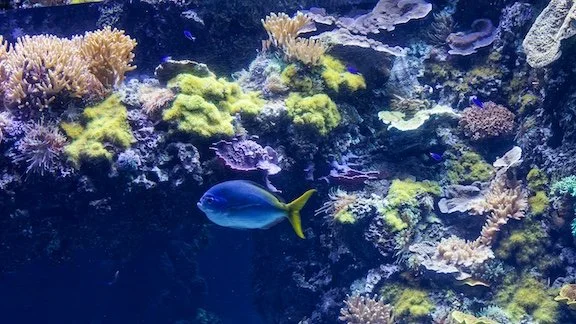
Over the past two decades, divers off the coast of Maui have noticed something unsettling beneath the waves: The reefs have been gradually growing quieter. Coral ecosystems that once pulsed with constant sound -- pops, grunts, crackles, and hums -- have been fading into an unnatural stillness.
This silence has deepened rapidly in the past several years as warming waters, disease, and repeated bleaching events have stripped reefs of the fish, shrimp, and tiny creatures that give coral its unmistakable chatter. Scientists have long understood that this sound is not incidental but essential. Coral larvae -- microscopic, drifting specks of new life -- depend on the soundscape of healthy reefs to know where to settle. They follow the chorus of a thriving ecosystem: the staccato popping of snapping shrimp, the rhythmic calls of reef fish, the layered background of living activity. Without that sound, the next generation never comes home.
In 2023, researchers at the Woods Hole Oceanographic Institution (WHOI) began exploring whether sound itself might help restore what had been lost. Marine biologist Dr. Aran Mooney led a team investigating acoustic enrichment: the idea that broadcasting real recordings of healthy coral reefs could lure young corals back to damaged sites. By 2024, they had created the Reef Acoustic Playback System (RAPS), an underwater speaker setup capable of projecting authentic reef soundscapes across a wide area.
The team installed two matching stations off the coast of Maui during key coral spawning seasons in 2024 and 2025. One station remained silent. The other played “reef music”: the living soundtrack of a flourishing coral community. Around both stations, the scientists placed settlement tiles, waiting to see where coral larvae would choose to attach and begin life.
And the difference was unmistakable. Tiles near the reef-music station collected up to seven times more newly settled coral than tiles in the silent area. Even in a damaged ecosystem, the simple reintroduction of the right sound -- a sound full of life -- became an invitation strong enough to draw new life home again.
Consider how this scientific breakthrough mirrors a pattern that echoes throughout Scripture: Psalm 42 describes how “deep calls to deep,” how God’s voice awakens something hidden and hopeful in the soul. Jesus speaks of it as well: “My sheep hear my voice… and they follow me” (John 10:27). Life responds to life. Hope stirs when hope is heard. Peace settles in when the soundscape around us shifts toward God’s presence.
And in this season of Advent, our Tradition series is helping us listen again for the sounds God uses to draw people toward renewal. On the first Sunday, the Advent wreath invited us to mark the slow, steady rising of hope -- a light that grows one candle at a time. Last week, our Christmas carols echoed the promise of peace, reminding us that songs of faith have guided weary hearts for centuries. These traditions shape the soundscape of this season. They remind us who we are, where we belong, and what promises we are meant to follow.
The story unfolding off Maui’s coast offers a living parable for Advent. In places where the world has grown quiet -- where hearts are tired or joy feels thin -- the reintroduction of even small signs of hope or peace can become a powerful beacon. A simple blessing spoken aloud, an act of kindness quietly offered, a song hummed in a kitchen or sanctuary, a prayer whispered in the early morning: Each becomes its own form of “reef music,” a sound of life in a place that has fallen silent.
This third Sunday of Advent invites us to listen for the music God is already playing in the world and to add our own voices to it. Our traditions -- candles, carols, Scripture, prayer -- are not tired relics; they are soundtracks of hope and peace meant to draw us, and others, toward new life.
And just as the reefs respond when the sound of life returns, so do people.