
The Pigeons of Pompidou
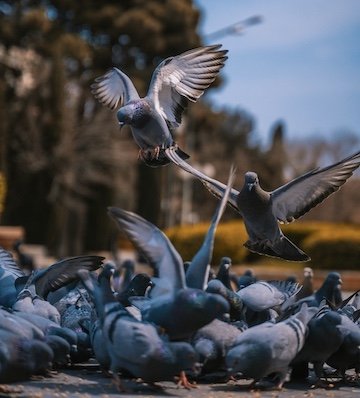
In the buzz of central Paris, just steps from the Centre Pompidou, there is a woman who walks into the square each morning with a small pair of scissors in her pocket. Her name is Catherine Hervais, and her task is simple: She sits quietly on a low stone bench, waits for pigeons to gather around her feet, and gently rescues the ones whose legs have become bound by stray threads and human hair.
The condition is called “string-foot,” and it happens when debris tangles around a bird’s toes and slowly cinches tight: sewing threads, bits of fabric, strands of hair swept from salons. If left untreated, the threads can cut circulation, damage nerves, and sever toes. In Paris, as in most major cities, a single hair can act like a tourniquet.
Hervais has studied the problem long enough to quickly discern which pigeons are hurting. She watches their gait — the slight limp, the pawing motion, the way a bird might keep one foot raised. When she spots a suffering bird, she coaxes it closer with seed, cups it gently in her hands, and begins the slow, patient work of cutting away each invisible snare.
“I can’t help every bird in Paris," Hervais says. "But I can help the one right in front of me.”
It is patient work. Quiet work. Work that no one asked her to do. Yet she shows up every day.
As we pause this Thanksgiving week to reflect on the good gifts of God, stories like this one remind us that the needs are all around us. Hervais doesn’t heal the whole city. She doesn’t solve every ecological problem. She sees a real, immediate need right in front of her and steps in.
In Philippians 2, Paul urges us to take on the same mindset as Christ: to look not only to our own interests, but also to the interests of others. In Luke 10, the Good Samaritan becomes a neighbor not through grand gestures but by noticing the wounded man others overlooked. And in Matthew 25, Jesus reminds us that each small act of mercy — feeding, visiting, tending — is ultimately done unto Him.
Catherine Hervais unravels threads from pigeon feet. Most of us will never be called to do the same, but her story raises an important question: What is the “string-foot” in our corner of the world — the need, problem, or opportunity God is asking us to notice and gently respond to?
As we enter Thanksgiving and move toward Advent this Sunday, perhaps the invitation is simply this: Slow down. Look closely. Notice the places where someone is limping. And do the small, merciful thing that is yours to do.
May we be people who untangle what harms, who bind up what hurts, and who step toward the world just as Jesus steps toward us.